Key Takeaways
- A 4D laser facelift addresses ageing by targeting multiple tissue depths rather than relying on surface tightening alone.
- Jawline ageing is primarily structural and laxity-driven, requiring deeper thermal stimulation for contour support.
- Mid-face ageing relates to volume descent and skin quality changes, which respond to layered collagen remodelling.
- Perioral ageing involves fine lines, texture breakdown, and repetitive muscle movement, making controlled surface and sub-surface heating essential.
- A 4D laser facelift works best when treatment parameters are adjusted by facial zone rather than applied uniformly.
Introduction
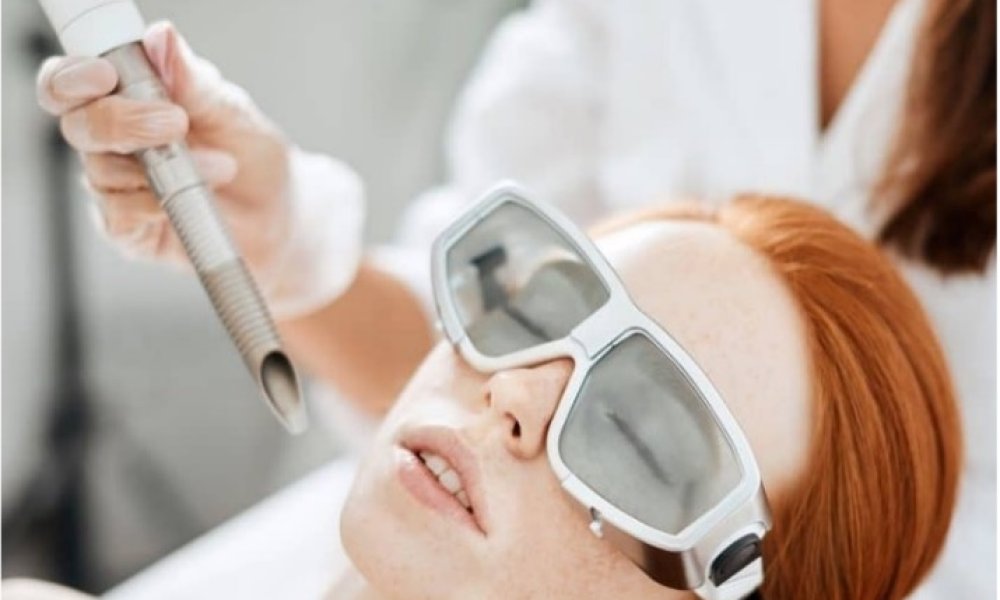
Facial ageing does not occur evenly across the face. The jawline, mid-face, and perioral region age through different biological and mechanical processes, which is why single-depth or single-mode treatments often produce uneven or short-lived results. A 4D laser facelift is designed to address this issue by combining multiple laser modalities that act at different skin depths. Rather than focusing only on tightening or resurfacing, it functions as a layered skin rejuvenation treatment that targets structure, texture, and collagen response according to the needs of each facial zone.
How a 4D Laser Facelift Works for Jawline Ageing
Jawline ageing is largely driven by structural laxity, reduced collagen density, and weakening support along the lower face. Over time, this leads to blurring of the mandibular contour and early jowl formation. A 4D laser facelift addresses this by delivering controlled thermal energy to deeper dermal and subdermal layers, where collagen fibres responsible for firmness are located.
The heat generated stimulates collagen contraction, followed by gradual remodelling over several weeks. This process does not reposition tissue but improves tensile strength and resistance to gravitational pull. Treatment emphasis for the jawline is typically placed on deeper passes and controlled energy delivery rather than superficial resurfacing. This approach prioritises contour stability rather than surface smoothing, which is why results tend to appear progressive rather than immediate.
How a 4D Laser Facelift Works for Mid-Face Ageing
Mid-face ageing presents differently. It is characterised by volume descent, flattening of the cheeks, and loss of skin density rather than sharp laxity. Skin in this area often appears tired before it appears loose. A 4D laser facelift targets the mid-face by combining deeper thermal stimulation with mid-dermal heating that supports collagen renewal without creating excessive surface disruption.
The objective in the mid-face is not tightening alone but structural reinforcement of the skin matrix. Controlled heat improves collagen organisation, which helps the skin better support underlying fat compartments. This treatment leads to improved firmness and texture rather than visible lifting. The mid-face response is often gradual and cumulative, making treatment planning and spacing critical for predictable outcomes.
How a 4D Laser Facelift Works for Perioral Ageing
The perioral region ages through repetitive muscle movement, thinning skin, and breakdown of surface texture. Fine lines around the mouth tend to be shallow but numerous, and aggressive treatments can compromise barrier function if not carefully managed. A 4D laser facelift, including the Fotona 4D Laser, approaches perioral ageing using lower energy levels combined with more superficial passes.
Here, the focus shifts to refining texture, stimulating surface collagen, and improving skin resilience without overstressing delicate tissue. The laser energy supports collagen renewal while preserving flexibility, which is essential for a region involved in constant motion. Perioral protocols are typically conservative and staged, favouring consistency over intensity to avoid prolonged redness or sensitivity.
Why Zone-Specific Planning Matters
The effectiveness of a 4D laser facelift depends heavily on how well treatment parameters are adjusted across facial zones. Applying uniform settings across the jawline, mid-face, and perioral area ignores fundamental differences in skin thickness, movement, and ageing mechanisms. Once used as a structured skin rejuvenation treatment rather than a generic laser session, a 4D laser facelift provides more balanced outcomes by addressing each area according to its functional needs rather than aesthetic trends.
Conclusion
A 4D laser facelift works most effectively when it is applied as a zone-specific skin rejuvenation treatment rather than a uniform facial procedure. Jawline, mid-face, and perioral ageing each require different depths of energy delivery and treatment emphasis to address their underlying structural and surface changes. Outcomes are typically progressive, reflecting collagen remodelling rather than immediate tightening. Proper assessment and customised planning remain critical to achieving balanced and predictable results across all facial regions.
Visit Halley Medical Aesthetics and know whether this skin rejuvenation treatment aligns with your ageing pattern and recovery expectations.