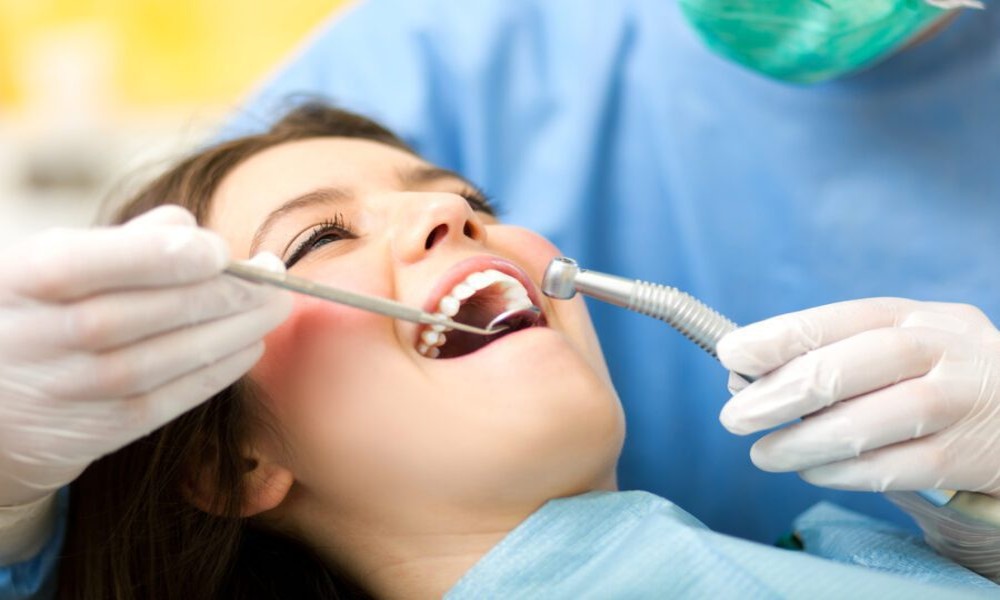
Walk into most dental offices with a cracked molar or a large old filling, and the conversation heads one direction: crown. The tooth gets shaped down to a little stub, an impression gets taken, and two weeks later a porcelain cap gets cemented over what’s left. The procedure works. It’s also one of the more aggressive things that happens to teeth in modern dentistry, and a growing body of research suggests that for many teeth, it’s more than the situation required. At All Smiles Dental in Burley, Dr. Spencer Rice offers biomimetic dentistry as an alternative for patients who want to preserve healthy tooth structure rather than sacrifice it.
Here’s what biomimetic dentistry actually is, when it’s the right choice, and why the distinction matters for the long-term life of your teeth.
What Biomimetic Dentistry Actually Means
The word biomimetic comes from “biomimicry,” meaning to copy nature. In dentistry, it refers to a set of techniques and materials that restore teeth in a way that mimics the structure, strength, and behavior of natural tooth tissue. The goal is to rebuild the tooth so that stress gets distributed the way it would in a healthy tooth, rather than being concentrated at weak points that crack under years of chewing.
Traditional dentistry relies heavily on mechanical retention. A crown stays on because the tooth has been shaped into a tapered peg that the crown grips. A large amalgam filling stays in place because it’s wedged into an undercut prepared by the drill. Both approaches work by removing healthy tooth to make room for the restoration.
Biomimetic dentistry flips the logic. Instead of removing tooth structure to create room, the technique bonds new material directly to the remaining tooth using advanced adhesive protocols. The restoration behaves like a continuation of the tooth, not a separate piece cemented on top of it.
Why Saving Tooth Structure Matters
Every millimeter of natural tooth you keep is a millimeter less work that the body has to compensate for. That sounds obvious, but the long-term consequences of aggressive drilling are often hidden for years until they show up as bigger problems.
A full crown prep removes roughly 60 to 75% of the visible tooth structure. That removal has consequences:
- The remaining tooth becomes more fragile and more reliant on the crown for strength
- The nerve inside the tooth is closer to the preparation surface, increasing the risk of post-operative sensitivity and eventual root canal
- If the crown ever fails or needs replacement, there is less healthy tooth left to work with
- The biomechanical behavior of the tooth changes, which can affect adjacent teeth and the bite over time
Research published in journals like the Journal of Adhesive Dentistry has tracked what happens to teeth after crown placement. The findings have been consistent for years: a meaningful percentage of crowned teeth eventually require root canal treatment, often within a decade of the original crown. That’s the “crown today, root canal later” pattern that biomimetic techniques are specifically designed to avoid.
How the Bond Chemistry Actually Works
Bonding in dentistry has come a long way from the early days of simple acid etching. Modern biomimetic protocols use a sequence of steps that create a stable, durable bond between the restoration and the tooth at a microscopic level.
In plain language, the process works like this:
- The tooth structure is cleaned and conditioned with specific chemical agents
- A primer flows into the microscopic tubules of the dentin, which is the layer beneath the enamel
- An adhesive resin cures into a hybrid layer that mechanically interlocks with both the tooth and the restoration
- Composite material is placed in small increments, each cured with a specific light protocol to minimize shrinkage stress
- The final restoration is shaped and polished to match the original tooth anatomy
The result is a restoration that functions as part of the tooth rather than as a separate cap sitting on top of it. When done correctly, the bond strengths achieved through biomimetic protocols approach the strength of the natural connection between enamel and dentin.
Stress management is a key element. Traditional composite fillings often fail because shrinkage during curing creates microgaps at the bond interface, leading to leakage, sensitivity, and recurrent decay. Biomimetic protocols use incremental placement, specific curing sequences, and stress-decoupling layers to minimize these problems.
When Biomimetic Is the Right Choice vs. a Traditional Crown
Biomimetic dentistry is not the answer for every tooth. Part of the value of seeing a dentist trained in the technique is getting an honest assessment of which approach fits your specific situation.
Biomimetic restorations often work well for:
- Large old amalgam fillings that need replacement
- Cracked teeth where the nerve is not yet involved
- Teeth with significant decay but sufficient remaining healthy structure
- Patients who have had a crown recommended and want to explore alternatives
- Younger patients whose teeth will need to last many more decades
Traditional crowns are still the right answer in cases like:
- Teeth with extensive structural loss where insufficient tooth remains to bond to
- Teeth that have already had root canal treatment and need full coverage
- Fractures that extend below the gum line or into the root
- Cases where esthetic demands require a lab-fabricated restoration
A thorough exam, digital imaging, and sometimes cone beam CT scanning help determine which category a tooth falls into. The answer often isn’t obvious from a quick visual inspection.
What the Appointment Looks Like
A biomimetic restoration typically takes longer than a traditional filling or crown prep. The additional time reflects the meticulous protocol involved. A single large restoration can take 90 minutes to two hours depending on the complexity.
What to expect during the procedure:
- Thorough removal of decay, often using magnification to identify the exact boundary between healthy and compromised tooth
- Evaluation of whether the remaining structure supports a biomimetic approach
- Application of the bonding protocol in a controlled, dry field, usually with a rubber dam
- Layered placement of composite material with specific curing between layers
- Final shaping, polishing, and bite adjustment
Most patients leave the appointment with a tooth that looks and feels like their own. There’s no temporary to manage, no second appointment for cementation, and no lab turnaround.
Long-Term Value for Patients Who Want to Keep Their Teeth
The investment in biomimetic dentistry often pays off over years rather than immediately. Patients who choose this approach tend to:
- Retain more natural tooth structure for future dental work if it’s ever needed
- Avoid or delay the need for root canals on restored teeth
- Keep their teeth functioning with less sensitivity and fewer recurrent problems
- Have more options decades later if additional treatment becomes necessary
The approach aligns with a broader shift in dentistry toward minimally invasive care. The American Academy of Cosmetic Dentistry and other professional organizations have increasingly emphasized conservation of tooth structure as a core principle of modern practice.
Exploring the Option for Your Own Teeth
If a crown has been recommended for a tooth that still has significant healthy structure, a second opinion that includes biomimetic options is worth having. Not every case qualifies, but the cases that do often benefit substantially from the more conservative approach.
Contact All Smiles Dental in Burley to schedule a consultation with Dr. Rice and find out whether a biomimetic restoration fits your situation. Preserving what’s already there is almost always the better long-term plan, and it starts with an honest conversation about what your tooth actually needs.