
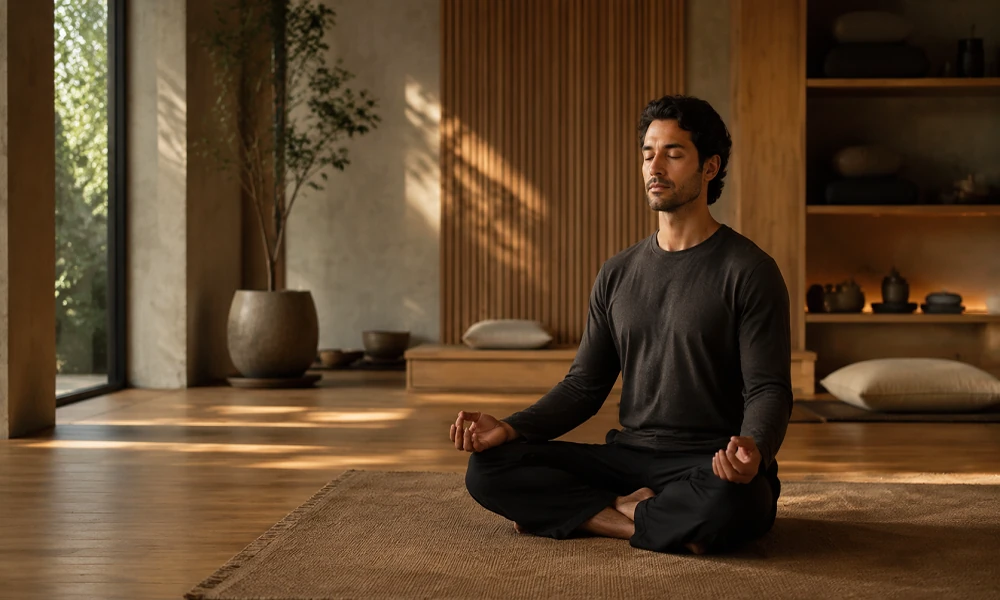
Modern life trains the mind to move quickly. Messages arrive, tasks overlap, and attention is repeatedly pulled toward whatever feels most urgent. Meditation introduces a different rhythm. It asks a person to pause, notice what is happening, and return to one point of focus without forcing the mind to become blank.
The science of meditation helps explain why this simple practice can feel meaningful. Each return to the breath, body, sound, or another anchor is a small act of mental training. Over time, those repeated moments may support steadier attention, greater awareness, and a less automatic response to stress.
What Slowing Down Really Means
A slower mind is not an inactive mind. During meditation, thoughts may continue to appear, memories may surface, and plans may compete for attention. The practice is not about stopping this activity. It is about recognizing it sooner and choosing whether to follow it.
A thought can be present without becoming a command. An emotion can be felt without immediately shaping the next action. By observing mental activity with less judgment, a person begins to create space between an experience and a response. Calm often grows inside that space.
Attention Becomes a Trainable Skill
Attention is sometimes treated as a fixed quality: someone either has focus or does not. Meditation suggests a more flexible view. When attention wanders and is gently brought back, the brain practices noticing distraction and reorienting itself.
This cycle may happen dozens of times in one short session. Wandering is therefore not failure; it is part of the exercise. With repetition, people may become more aware of where their attention goes during ordinary life. That awareness can make it easier to return to a conversation, task, or physical sensation instead of remaining caught in mental noise.
The Stress Response Learns Another Path
Stress prepares the body to respond to pressure. Heart rate may rise, muscles may tense, breathing may become shallow, and the mind may scan for threats. This response is useful when immediate action is needed, but it can become tiring when everyday demands keep it active for long periods.
Meditation offers the nervous system a contrasting experience. A steady posture, slower breathing, and sustained attention may help the body shift toward a more settled state. Research suggests that mindfulness practices may support stress management and modest improvements in some symptoms of anxiety or depression, although results differ across people and studies.
The value is not that meditation removes every stressor. It may instead help a person notice activation earlier and meet it with a practiced response: pause, feel the body, breathe, and decide what the moment requires.
Thoughts Lose Some of Their Pull
The mind naturally tells stories. It replays conversations, predicts outcomes, and tries to solve problems that are not yet happening. Meditation makes this process easier to see. A practitioner may begin to recognize an experience simply as planning, remembering, worrying, or judging.
The content of a thought may not change, yet its grip can soften. Rather than arguing with the mind or accepting every idea as fact, a person can watch the thought pass and return to the present. That skill may support emotional regulation by creating room for a more measured response.
Repetition Matters More Than Intensity
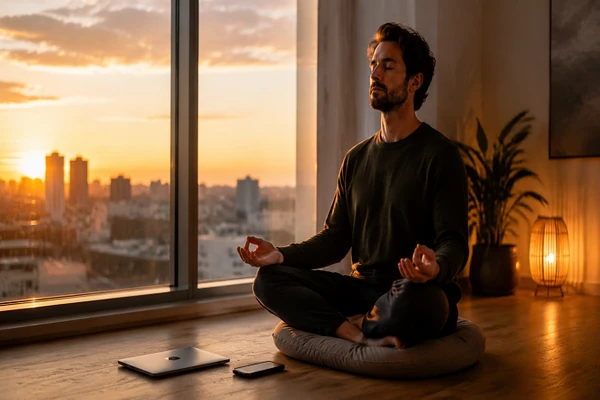
Meditation usually develops gradually. A single session may feel restful, restless, emotional, ordinary, or all of these at once. Lasting change is more closely connected with returning to the practice than with producing a particular feeling every time.
Short, regular sessions can create a realistic foundation. Five or ten attentive minutes may be more useful than an ambitious routine that is difficult to maintain. The aim is consistency without pressure. As familiarity grows, longer sessions or different methods can be explored naturally.
Finding a Way In
There is no single meditation style that suits every person or every day. Breath awareness offers a simple anchor. Guided meditation can provide structure when the mind feels busy. Sound, visualization, loving-kindness, or open awareness may support different needs and preferences.
Op e n brings meditation together with breathwork, movement, and sound, offering accessible ways to return to the present. The right practice is not necessarily the one that creates instant silence. It is the one a person can return to with curiosity.
When the mind learns to slow down, life does not stop moving. Attention simply no longer has to move with every demand. Even a small pause can reveal more choice, more clarity, and a steadier way to meet what comes next.